Hamburg

Ballet Workout: First-Timer Report

It’s Saturday, the sun is shining and I’m making my way to my first ever ballet workout, workout gear pulled on and workout bag in hand… Wait, how did this even happen?!

I’ll tell you how! 2018 arrived and I wanted to do things I’d been thinking of for a while, or at least try. It helped that a dear friend had similar thoughts. Workout clothes, workout bag, work out buddy – that’s just how I do things now!

Wait, how did this happen? I’ll tell you how! Roomy corridor, pleasant receptionist, easy system and cheap monthly rates are all important points, as well as being able to  try out as many courses as you like and (physically) can.

We sat outside the gym, waiting for the previous class to finish, in our workout gear and not worn anywhere else sneakers… and a few girls passed us dressed in seriously ballet-inspired clothes and slippers. Once in the gym, the instructor isn’t there yet, so I covertly sneak glances at what the other participants are doing instead of asking directly if it’s OK to drape my towel over the bar. The cues are easy to identify and the sneakers simply get taken off. My socks don’t slip on the wooden floor and I’m hoping I won’t tear my leggings during a stretch I can’t yet imagine. RRRRip! Please no, these are new.

The instructor arrives, the music starts and with quick relief I discover that we are all following our individual levels of fitness, with no prolonged scrutinizing or comments. The classical music playing is soothing and my mind easily wanders elsewhere during the warm-up. It is my belief that those of us with Russian roots might be predisposed to like ballet. Regardless of whether we’ve actually done it ourselves (as you do) or only seen performances, there is something about ballet that makes the Russian heart flutter and eyes mist up, while images of The Nutcracker or Swan Lake take over our minds. We are genetically and historically primed to respond to these movements and knowingly say, “Ah yes!” when ballet enters conversation with other people.

All of the above might be part of my slight romanticzing of the ballet workout, though I’m practical enough to be careful about the workout part. But I’m not proceeding badly or stiffly at all, and I’m enjoying the stretching parts of the session. However, as soon as we get to exercises involving lying on your back and lifting your legs in various positions, well, oh dear. But this is my very first ballet workout, after all.

We sit back up and stretch forward, trying to touch the tips of our straight legs. This is a predictable challenge. The last time I did this, I was six years old and I could do so with both hands at the same time. It was during a dance class, and my teacher was wonderful – perceptive, patient and competent. I remember her in an emerald-green blouse, grey trousers, with a tiny waist and beautifully applied bright make-up. Maybe these memories are part of the reason I was looking forward to today.

My leg bends before I can reach my toes, like that time my eye would shut before I could put in a contact lens. The voice in my head is alternating between repeating Oh, God and quietly swearing in my best imitation of what everyone else thinks a British accent is. I catch my friend’s eye and have to resist making a face, because we are actually concentrating and no one besides the instructor is saying anything. In fact, I do giggle when I catch another redhead’s eye, because she’s taking a tiny break, like me, but she doesn’t react back. Noted!

I’m still able to get up without a fuss as we get to the final exercises. I mess up the sequence of moves, but the music is lovely and I’m trying to remember whether it’s the opening of the Waltz of the Flowers from The Nutcracker (that’s as Russian as I get today). The ballet workout seems to be over before I know it and I am already sure while carefully (just in case) walking out that I will want to come again.

The rest of the day passes and I feel fine, mastering stairs is not a problem, but let’s see what my muscles say tomorrow.

Standard
Hamburg

Rubber Boots in Hamburg Are…

A necessity? Another important step towards becoming local, after getting wet in the rain, eating Labskaus and taking a harbour boat trip on the HVV ferry?

I have held out for almost ten years, most likely because of my Siberian roots making me more used to searching for warm winter shoes rather than rubber boots. We don’t get as much rainy weather there as in Hamburg. But I do believe, if you don’t own rubber boots already, when you move to this city, you will arrive at that point. One day, possibly a day when huge flakes of wet snow are dropping rapidly from the sky, you will wake up, go outside, take a few steps and know, now. Either you splash through, get wet and DEAL with it (whether complaining or nonchalantly is up to you), or you get the proper EQUIPMENT and stay dry!

So sometimes profound life questions that we have been asking ourselves for years get answerd in one go. I enjoyed browsing silver, flower-patterned and generally glittering rubber boots priced way beyond my budget range for this month, virtuously walked away and got comfortable black ones with a dependable sole. Let the puddle jumping begin.
Standard
Hamburg

International Maritime Museum

One of Hamburg’s most fascinating museums is a must for history buffs, maritime fans and anyone loving this city. It houses both international exhibits and showcases Hamburg’s prominent link to maritime history in Europe and the world.

I had been meaning to go for a while and found myself making my way there one Sunday morning. The trip there holds a certain amount of excitement in itself, as one of the possible routes takes you to Überseequartier, a cavernous, gleaming station inlaid with blue (immediately reminiscent of all those sea-inspired vibes) and part of Hamburg’s most recently completed subway line, the U4. Getting out, you’ll see ongoing construction in the still new HafenCity district, and then a few minutes walk will take you to the museum iteself.

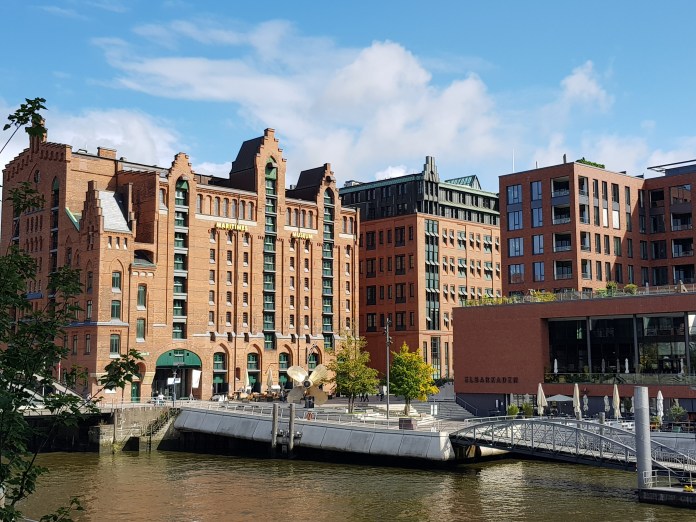
The International Maritime Museum is located in Hamburg’s oldest warehouse, Kaispeicher B. 10 floors, or “docks” filled with an enormous scope of sailing and ship-building artefacts, sketching out voyages across the world, the development of navigation, battles taking place at sea and the expansion of modern passenger sea travel await discovery.

One of my favourite sections included an outline of the history of lighthouses – it turns out the first ones were built in ancient Egypt. A detailed, intricate model of one of Germany’s most famous lighthouses called Roter Sand accompanied the exhibit, giving a glimpse in to the inside of the structure.

I spent several minutes staring at a model of the cruise liner the Queen Mary 2, built out of Lego. It took six months and roughly one million Lego pieces to put it together.

Models of ships from various centuries hung suspended from the ceiling, some against a background painting of the sea, like that of Wapen von Hamburg (III) from 1722. She sailed from Hamburg, accompanying merchant ships solely for protecting them against pirate attacks. Staring at it, it was easy to forget the strings holding up the model and to imagine her sailing in front of you for real.

This slideshow requires JavaScript.


Standard
Hamburg

Labskaus: Another Hamburg Mystery

Hamburg, my love, you continue to delight, surprise and occasionally baffle me.

If you live here, you find yourself talking about local things to people. Local things include local dishes. Northern German cuisine is perhaps not as readily recognizable or identifiable as some others, but it exists, solidly and reliably. As with many things in the North, and that means Hamburg too, it needs some time to be discovered, and then you might feel like testing it out.

This is how I found myself looking at a large plate with Labskaus neatly scooped in the middle during my lunch break in the lovely Kleinhus Cafe und Weinbar. After many years of countless jokes, discussions with friends, incredulous exclamations, perusing articles online and trying to decide ja or nein, while all the time not having a clue what set Labskaus apart, the moment of truth was finally upon me.

Labskaus is a bit of an enigma for anyone who didn’t grow up here. Why? Simple. It looks like a mound of raw meat ground to mashed potato consistency with fried egg on top, and a side helping of gherkins and pickled herring fillets also known as rollmops. Something about the combination just makes some of us hesitate. Historically it was said to be a popular dish among sailors in Northern Germany, and the mashed consistency made it easy to eat since many of them had bad teeth.

Fast forward a few hundred years later to some wary diners. The meat is salted, not raw, it just looks that way in some cases, most likely due to a generous helping of beetroot and carrots. The dish might differ slightly in different restaurants. It’s warm, filling, and easy to eat. Don’t let what might look like a small-sized portion fool you, the helping is more than enough.

It all comes down to this. Labskaus by no means tastes how it looks…but it still looks the way it looks. Or some of us (me) overthink things. Guten Appetit!

Standard
Hamburg

Marble Painting for Beginners

Thanks to a friend I happened on Studio 42 in Hamburg and took their class on marble painting. Result: it’s addictive! While doing it does require some space and covering up to avoid a mess, the whole process is exciting and even a little addictive. Obviously there are various levels to the technique and the creations that full-time marble painting artists come up with are mind-blowing. But those of us just starting out or looking for some artsy, creative enjoyment can proceed with full assurance of producing a unique, (mostly) abstract print full of colours playing off each other.

Read below to see one example of how you can do your own bit of marble painting.

What you need:

Rectangular shallow basin or tray – size depends on the paper size you’ll be using for your painting

Bigger basin

Glass sheet

Drying rack

Drawing paper

Old newspapers

Acrylic paints

Paintbrushes

Toothpics

Water

Bowl

Thin sponge

Thin rubber gloves from a pharmacy

Aluminium sulfate

Ox gall

Step by step:

  1. Fill your tray or basin with water, but not all the way to the brim, leaving an inch or two.
  2. Add the ox gall to the water (if you Google this, you might find that opinions differ on how much to add and whether to add any to the tray at all – take your pick!)
  3. Put on the rubber gloves.
  4. Mix your colours in small jars or containers using the acrylic paints and add bottled water so that it will be possible to shake/ spray the paint on the surface of the water later on.
  5. Mark one side of your sheet of paper with an X.
  6. Dissolve the aluminium sulfate in a bowl of water (ditto on the amounts in terms of different opinions), soak the sponge in it and wet both sides of the paper with wide, even strokes.
  7. Set paper aside to dry.
  8. Dip the brush in the prepared colour you want to start with. Hold the brush in one hand, positioned above the surface of the water, and gently, but firmly tap it against the index and middle finger of your other hand. Ideally, paint splotches will fly off the brush and settle on the water’s surface. Repeat this with several colours. Use a toothpic to create patterns.
  9. Turn the sheet of paper with the side marked X facing up towards you, take the bottom corner on one side and the upper corner on the other, and lower the sheet, placing it on the surface of the water.
  10. After a few seconds, pick up the sheet by both upper corners, and transer it to the board or sheet of glass in the larger basin. Douse with water to get rid of excess paint, then carefully transfer to drying rack. Use wide strips of old newspaper to skim the surface of the water in the tray before the next session.

This slideshow requires JavaScript.

All photos by @juniperlu

Standard